

Dutch Oven 101: What to Know Before You Buy
A good Dutch oven does more heavy lifting in a kitchen than almost anything else you own. One pot goes from browning meat on the stovetop to braising for hours in the oven to serving straight at the table, and it holds heat so evenly that even an average cook turns out a genuinely great stew. If you're wondering what a Dutch oven actually is, whether it's worth the money, and which size and material matters, this guide covers what to know before you buy.
What Is a Dutch Oven, and Why It's Worth the Counter Space
A Dutch oven is a thick walled pot, traditionally cast iron, with a tight fitting lid built to trap moisture and hold heat far longer than a regular pot. That thick wall is the whole point. It heats slowly and evenly, then keeps radiating that heat long after you've turned the burner down, which is exactly what a stew, braise, or pot of beans needs to come out right. The benefits go beyond flavor too. A single Dutch oven can sear, braise, simmer, deep fry, and bake bread, which means it can replace two or three other pieces of cookware you might otherwise buy separately. An enameled cast iron Dutch oven is a good example of the kind of piece that ends up doing double duty in most kitchens.
How to Use a Dutch Oven for Better Stews and Braises
Using one is straightforward once you understand what it's actually doing. Sear your meat directly in the pot first, since that browned bit stuck to the bottom becomes the base of your sauce once you deglaze it. From there, add your liquid, bring it to a simmer, then either drop the heat low on the stovetop or transfer the whole pot into the oven, lid on, and let the heat retention do the work for a couple hours. That's why heat retention makes such a noticeable difference on stews specifically. A thin pot fights you the entire time, losing heat every time you lift the lid, while a heavy cast iron one barely notices. A tight fitting lid matters just as much here, since it keeps that trapped steam recirculating instead of drying out whatever's cooking underneath.
Cast Iron, Enameled, or Something Else?
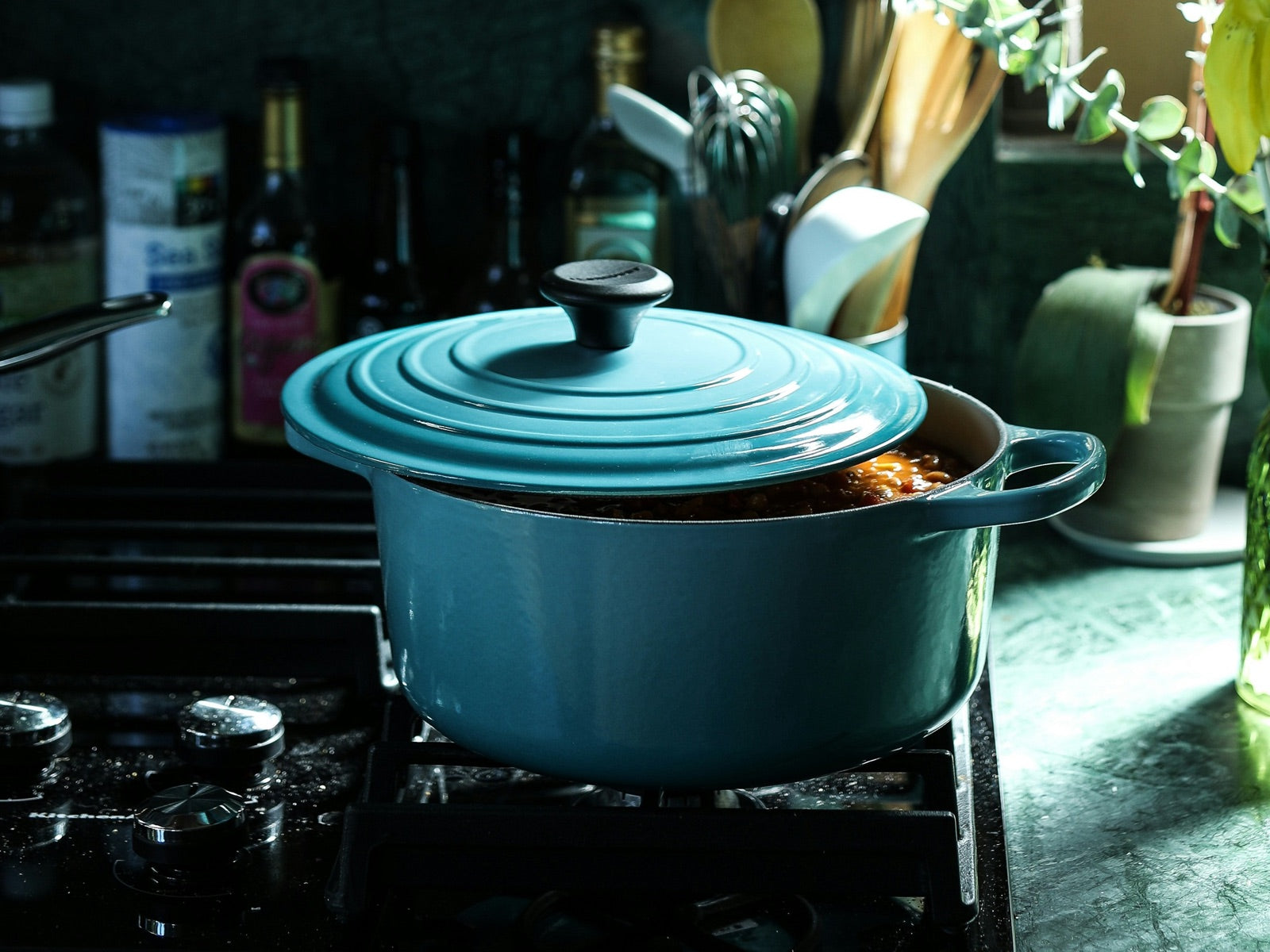
Bare cast iron holds heat the longest and builds a natural nonstick patina over time, but it needs seasoning and can react with acidic sauces like tomato or wine. Enameled cast iron solves that problem with a glass like coating fused over the iron, so you get the same heat retention without the seasoning routine or the acid reactivity, which is why most kitchens reach for enameled over bare. If you're comparing a Dutch oven to a French oven, or wondering about a cocotte, they're all largely the same idea. A round cocotte is just the more refined sounding name enameled cast iron picked up over time. You'll also see ceramic Dutch ovens, which are lighter and often prettier on a table but don't hold heat quite as well as true cast iron.
Sizes and Key Features to Actually Look For
Size matters more than most people expect going in. A 4 to 5 quart Dutch oven covers a weeknight stew or a small batch of soup, a 6 to 7 quart handles a whole chicken or a big pot of chili, and anything larger than that is really built for feeding a crowd. Beyond size, check for a tight fitting lid that seals in moisture, since a loose lid lets steam escape and dries out anything cooking low and slow. Handles that stay cool enough to grip, even with a towel, and a base heavy enough to sit flat without wobbling are the other two details that separate a Dutch oven that lasts from one that doesn't. A sturdy stock pot shares some of that same thick base logic if you're comparing the two side by side.
Where to Buy a Reliable Dutch Oven Without Overspending
A reliable Dutch oven under 200 dollars is realistic if you stick with enameled cast iron in a mid size, 5 to 6 quart, rather than chasing a premium brand name. What you're paying extra for at the high end is mostly enamel finish quality and lifetime warranties, not meaningfully better cooking performance. A budget-friendly enamel Dutch oven can perform close to the premium options for everyday cooking. A braiser can fill in for lighter tasks if you're not ready to commit to a full Dutch oven yet, but for anything that needs hours of steady heat, there's no real substitute. Browse our full range of cookware sets or shop Dutch ovens directly to compare sizes and finishes before you buy.
A good Dutch oven isn't a trendy purchase, it's the pot you'll still be using in twenty years. Get the size right, pick a finish that matches how you cook, and it'll outlast almost everything else in your kitchen.